Team
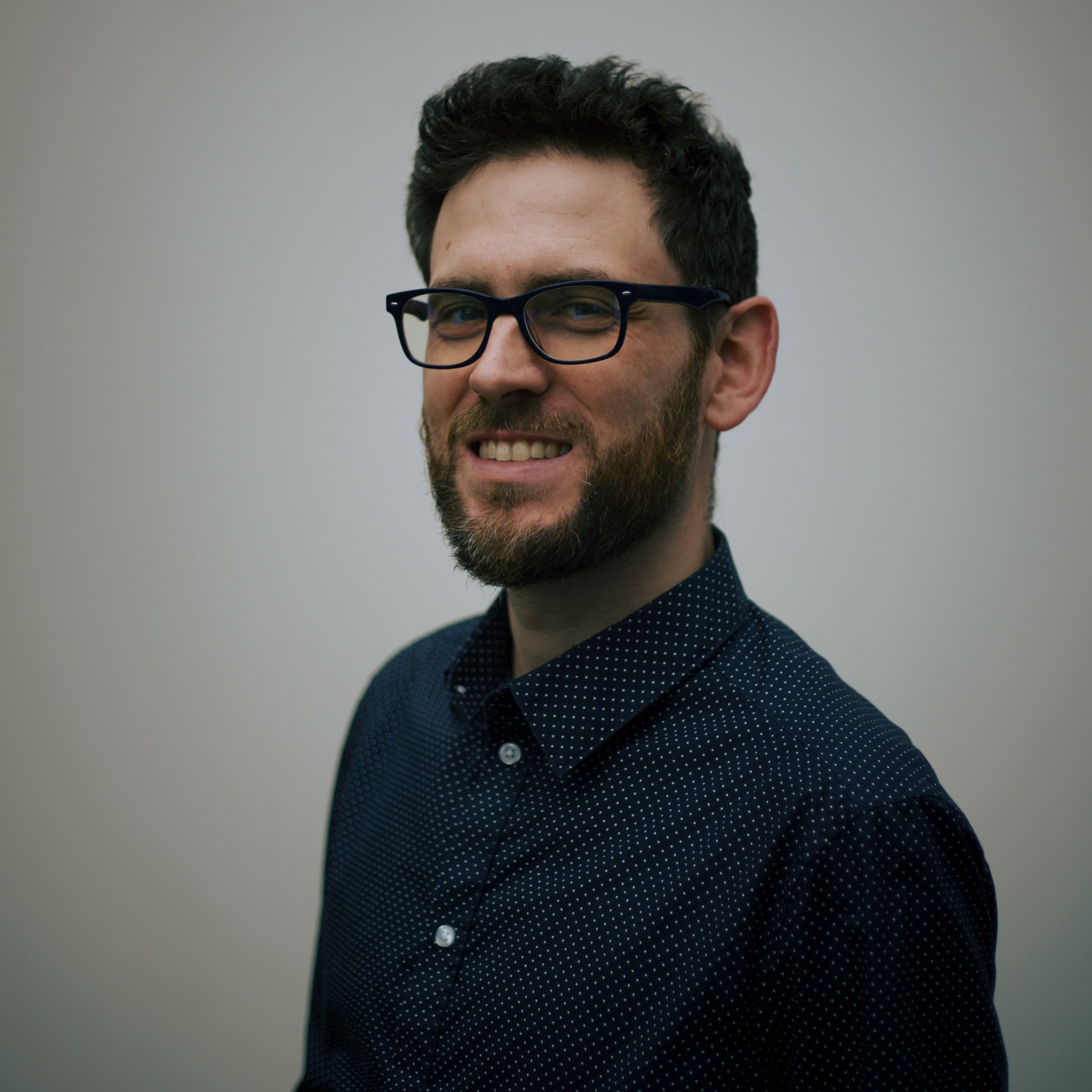
Dr. Martin Müller
Group Leader
After completing his studies in Materials Science and Engineering at Saarland University in 2014, Martin Müller initially worked as a materials and welding engineer in the forging and ring rolling industry. In 2018, he returned to Saarland University to pursue his Ph.D. at the Material Engineering Center Saarland (MECS) in collaboration with the Dillinger Hüttenwerke AG. His doctoral research focused on the characterization of steel microstructures and their segmentation and classification using machine learning methods. After completing his doctorate, he was responsible —in a dual role at MECS and the university’s Chair of Functional Materials— for both scientific and industrial research projects in the fields of steel and artificial intelligence. Since October 2025, he is leading the new working group “Data-Driven Materials Design” at the Chair of Experimental Methods in Materials Science at Saarland University.
He is still affiliated with MECS and also a partner at Advance Machine Intelligence GmbH.
Current Focus Areas:
- Correlative Microscopy
- Materials Data Science
- Machine Learning based Microstructure Analysis
- Data-Driven Materials Design
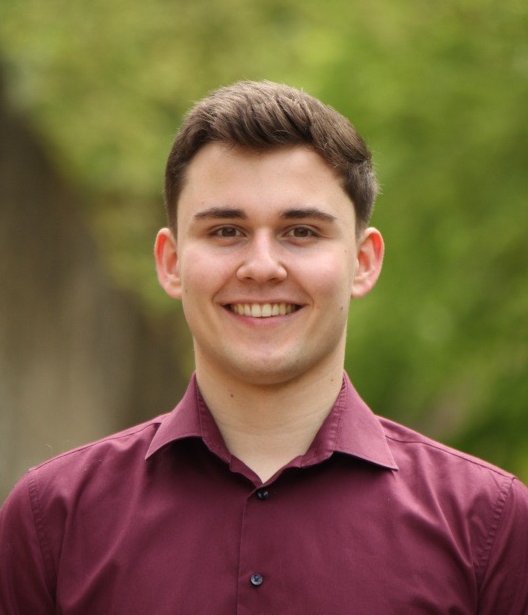
Jan Niklas Kaufmann, M.Sc.
Full-time research assistant and PhD student
Jan Niklas Kaufmann earned a bachelor’s degree in Quantum Engineering and a master’s degree in Materials Science and Engineering. During his studies, he gained a wide range of experience in the fields of physics, materials, and engineering while working as a student assistant. Jan Niklas joined the group as a research assistant in March 2026 and is leading the project “Microstructure-based prediction of local material properties using machine learning methods” as part of his doctoral research. He is also one of our experts in generating new experimental datasets.
Current Focus Areas:
- Mechanical characterization at nano, micro, and macro-scale
- Correlative microscopy
- Machine learning for property prediction
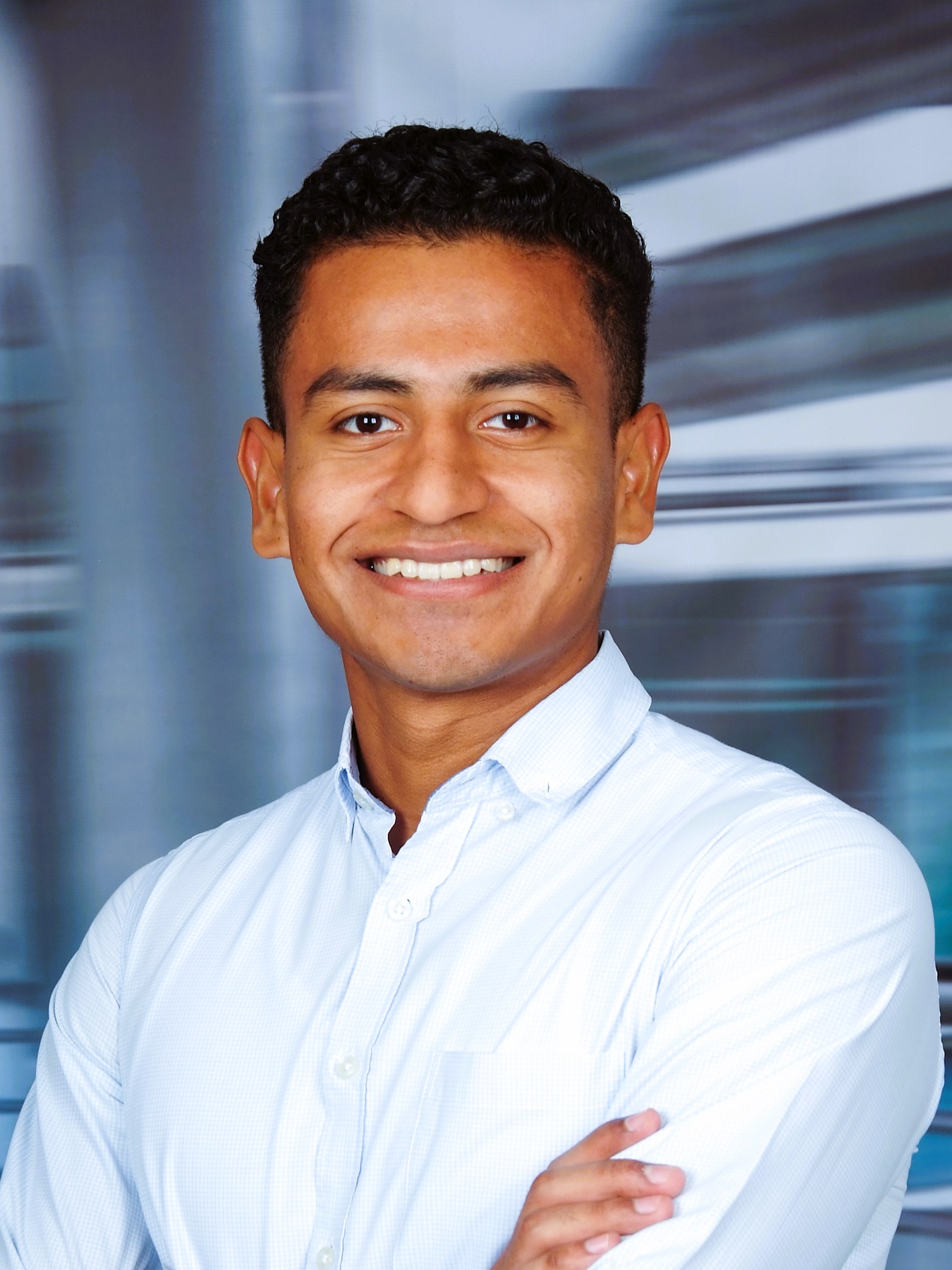
Camilo Andres Martinez Martinez, M.Sc.
Full-time Research assistant
Camilo Martínez earned a bachelor’s degree in Mechanical Engineering with a minor in Computational Mathematics from Universidad de los Andes and a master’s degree in Data Science and Artificial Intelligence from Saarland University. His previous research experience spans Computer Vision applied to materials microstructure analysis at MECS, multimodal EEG and eye-tracking for intent prediction at DFKI, and continuous regression from EEG signals at Max Planck Institute for Informatics.
Camilo joined us as a full-time research assistant in August 2026 and is working on Machine Learning methods for microstructure analysis in low-data regimes, focusing on developing reliable methods for small, heterogeneous datasets while reducing manual annotation effort.
Current Focus Areas:
- Computer Vision
- Data-frugal machine learning for microstructure analysis
- Active, semi- and self-supervised learning
- Foundational Models

Karnika Bhardwaj, B.Sc.
Student assistant
Karnika Bhardwaj earned a bachelor’s degree in Physical Science (a combination of physics, mathematics and computer science) from University of Delhi, India and is currently studying Master’s in Data Science and AI at Saarland University. She has extensive experience in computer vision and deep learning, having worked with astronomy data, satellite data, medical data. She joined our group as a student assistant in March 2026, helping out with implementing model pipelines and bringing her CV and DL skills to various materials science and microstructure applications.
Current Focus Areas:
- Deep learning
- Computer vision
- Multimodal image registration

Hurriya Nasir
Student assistant
Hurriya Nasir has a Bachelor’s degree in Computer Science and is currently studying for a Master’s in the same subject at Saarland University. Drawing on her experience in software engineering and large language models (LLMs), Hurriya is overseeing our projects on LLM-based data annotation and agentic AI for knowledge management.
Current Focus Areas:
- Large Language Models
- Agentic AI
- Data processing
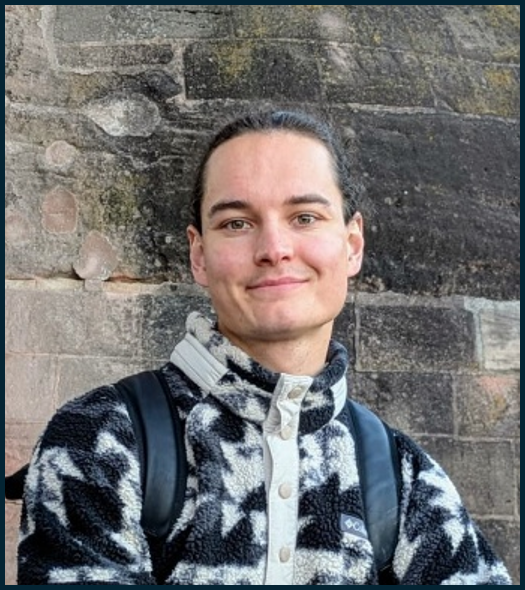
Noah Quartz, B.Sc.
Student assistant
Noah Quartz earned a Bachelor’s degree in Materials Science and Engineering and is currently pursuing a Master’s degree in the same field. Before joining the group as a student assistant in May 2026, he gained extensive hands-on experience in metallurgy and metallography while working as a research assistant in the materials science department. He supports our work in many ways: metallography, mechanical testing, data annotation, preparation of few-shot examples, and as an indispensable feedback loop in the evaluation of our LLM data processing pipelines.
Current Focus Areas:
- Metallography
- Mechanical testing
- Data annotation
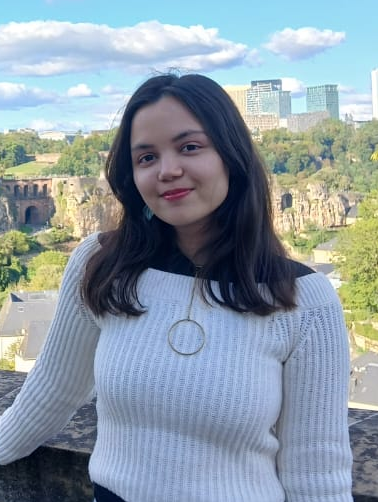
Mahima Haque, B.Sc.
Master thesis
Mahima Haque completed her Bachelor’s degree in Aeronautical Engineering. She is currently a student in the Erasmus Mundus Joint Master’s Programme in Advanced Materials Science and Engineering (AMASE), studying at Saarland University (Germany) and Montanuniversität Leoben (Austria).
In her master thesis, that we co-supervise with Montanuniversität Leoben, she is working on the data-driven optimization of the sintering process of aluminum oxide ceramics. Within a Bayesian optimization framework, she is using forward and inverse modeling for guided experimentation and deriving the optimal sintering parameters required to achieve a desired microstructure.
Current Focus Areas:
- Machine learning for property prediction
- Bayesion Optimization
- Inverse Design

Benjamin Arias, B.Sc.
Master thesis
Benjamín Arias is a Mechanical Engineering student at the Rosario National University (UNR) in Argentina. As part of the KOSPIE scholarship, he joined the Chair of Funtional Materials at Saarland University in October 2025, starting his master thesis that is jointly supervised by the data-driven materials design group. His master thesis focuses on applying machine learning for microstructure analysis in low-data conditions. He is currently completing a research internship at Volkswagen AG in Wolfsburg, focusing on warm forming automotive steel characterization.
Current Focus Areas:
- Machine learning for microstructure segmentation
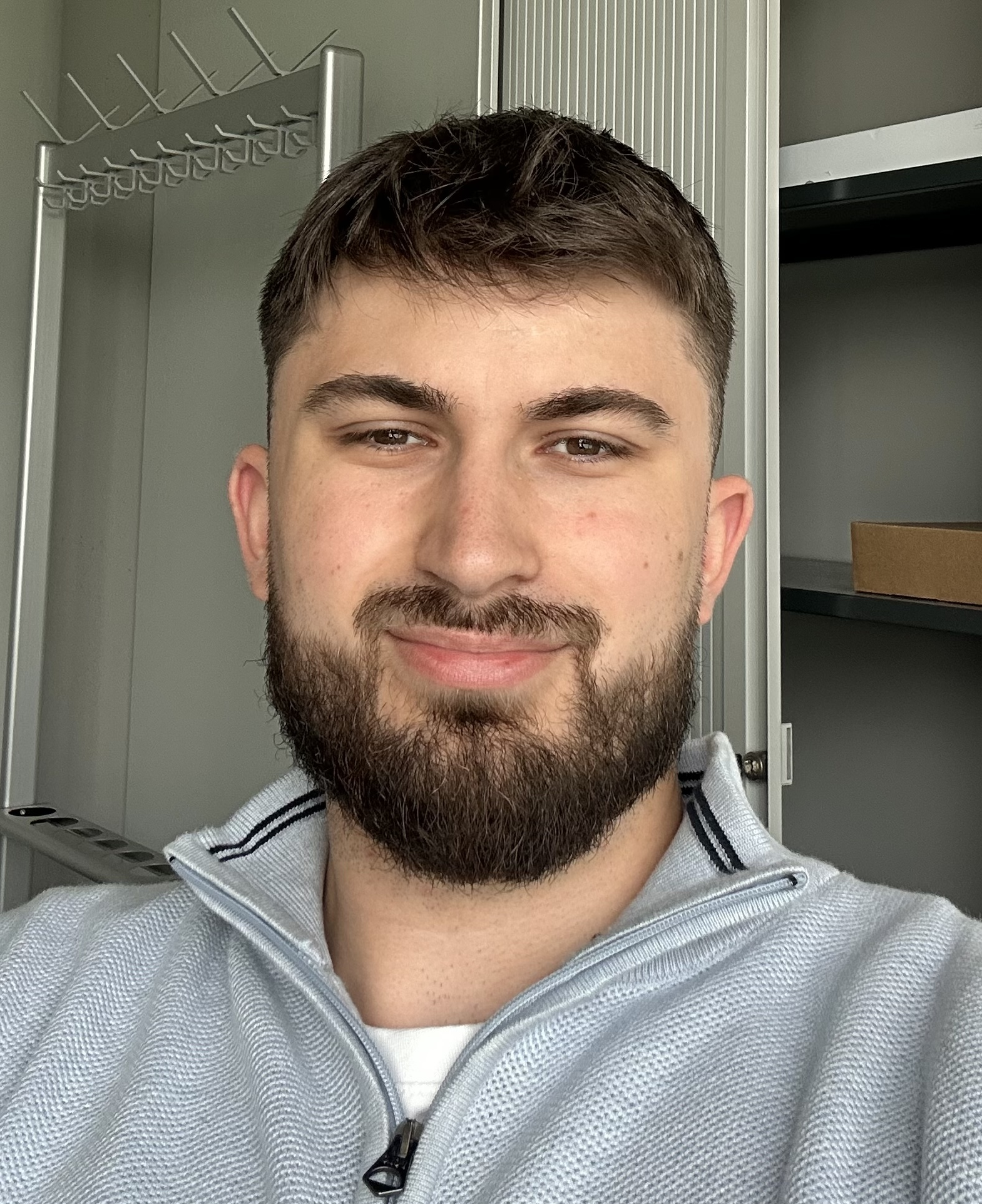
Julian Fisselbrand, B.Eng.
Bachelor thesis
Julian Fisselbrand holds a Bachelor of Engineering in Mechanical Engineering and is currently studying Data Science and Artificial Intelligence at Saarland University. From his previous industry position, he has practical experience in engineering design, automotive process and quality optimization, as well as software testing and automation. In his bachelor thesis in the Data Driven Design of Materials Group, he investigates Meta’s Segment Anything Model for microstructural image segmentation. His work focuses on evaluating and fine-tuning SAM for microscopy data and comparing it with established U-Net architectures, particularly in low-data scenarios.
Current Focus Areas:
- Machine learning for microstructure segmentation
- Foundation models (SAM)
Emily Chen
Intern
While working toward her high school diploma, Emily Chen is already enrolled in a junior study program at Saarland University. As part of this program, she is completing an orientation internship to gain her first practical experience. Through this internship, she is gaining insights into metallography, microscopy, mechanical characterization, and the processing and annotation of the resulting data.
Current Focus Areas:
- Metallography and microscopy
- Data processing and annotation